Home
Residential Floor Coatings
Garage Flake Floors Outdoor Concrete Coatings Interior Concrete Coatings
Commercial Floor Coatings
Flake Floors Shop Floors Polished Concrete Cementitious Overlays Grind & Seal Stain & Seal Gallery Blog Book Now
Diamond-Polished · Densified · Savannah, GA

Polished
Concrete

Metal-bond diamonds, lithium silicate densifier, and a resin-honed finish from satin to mirror gloss — the floor that lasts as long as the building.

Veteran-Owned
Family-Operated
Dust-Free Process
Written Warranty

What Polished Concrete Actually Is

Not a coating, not a sealer — a mechanical transformation of the slab itself into a dense, light-reflective, permanently finished floor.

Grinding, Honing, Polishing — Like Gemstone Work, at Floor Scale

Polished concrete is exactly what it sounds like: we take the slab you already own and polish it the way a lapidary polishes stone — with diamonds, in stages, until it shines. There's no film on top to scratch, yellow, or peel. The finish is the concrete, which is why polished floors in warehouses and big-box stores survive decades of forklifts and foot traffic without a recoat.

The process runs through two families of diamond tooling. Metal-bond diamonds — coarse, aggressive segments in roughly 30 to 120 grit — do the heavy cutting: flattening the slab, removing old coatings and laitance, and exposing the amount of aggregate you want to see. Then resin-bond diamonds take over, stepping through 100, 200, 400, 800, 1,500, and up to 3,000 grit, each pass refining the scratch pattern of the one before it until the surface reads as sheen instead of scratches.

In between, we flood the floor with a lithium silicate densifier — a penetrating liquid that reacts with the free lime in concrete to grow additional hard mineral (calcium silicate hydrate, the same stuff that makes concrete strong) right inside the surface. Densifying is what turns a soft, dusty slab into a floor hard enough to take a true polish and hold it under traffic.

The final step is a penetrating stain guard, burnished into the surface at high speed. It doesn't change the look — it just buys you time when coffee, oil, or wine hits the floor.

Polished Concrete — Nothing to Peel, Ever
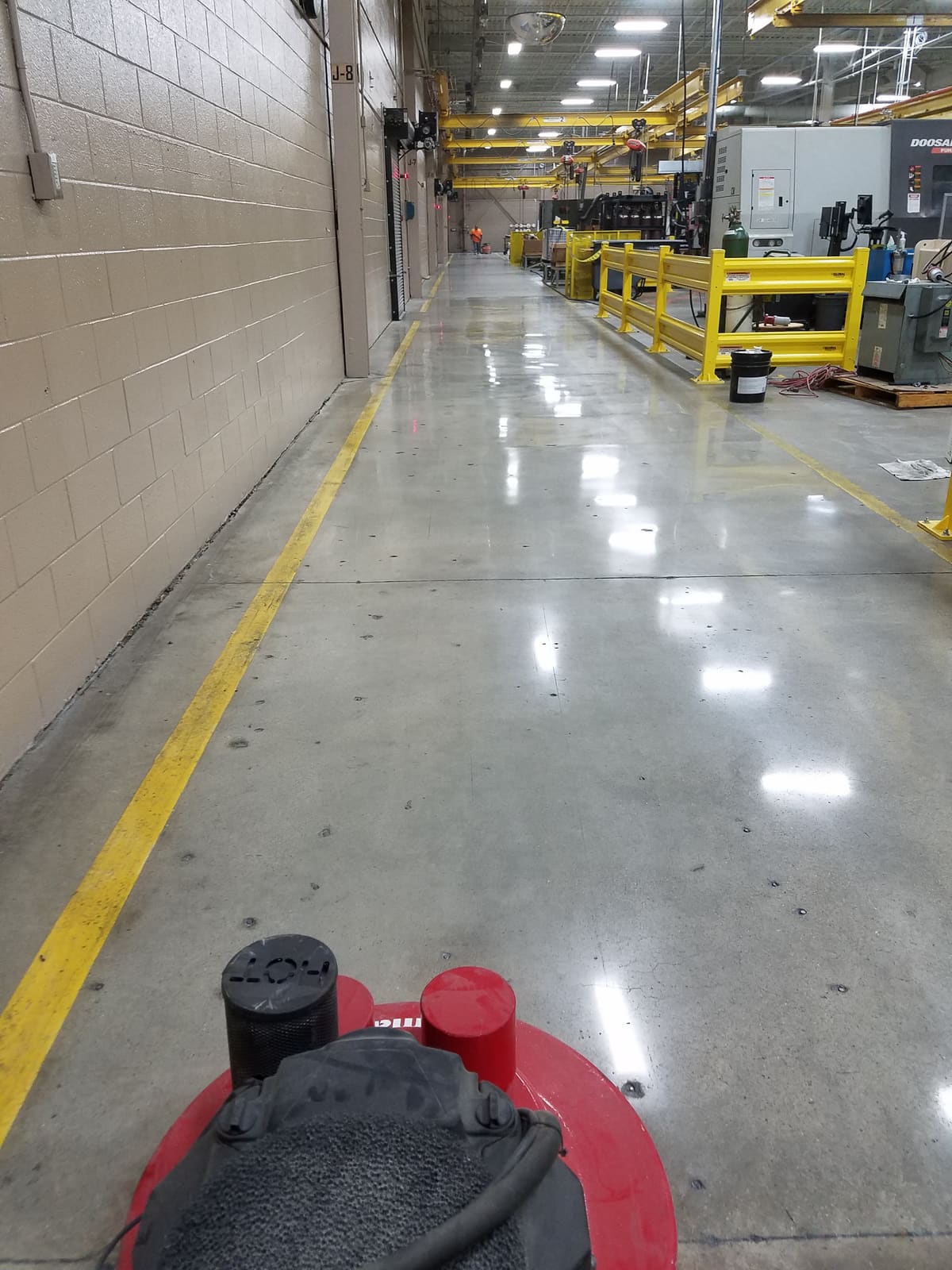
Stain GuardPenetrating protection, burnished in
Lithium Silicate DensifierHardens the slab from within
Polished ConcreteYour slab, honed to the chosen sheen
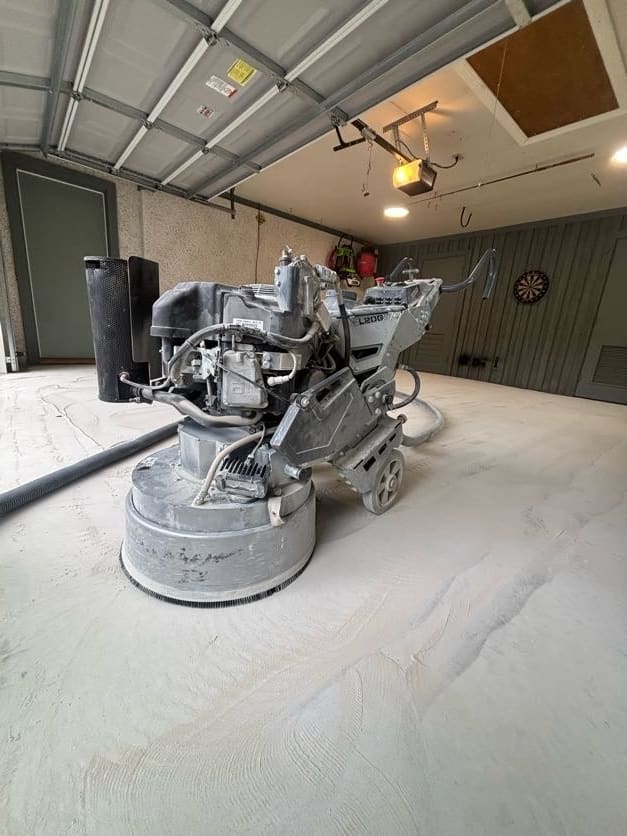
Photo: Polishing machine mid-process

Finishes: Satin to Mirror Gloss

The grit we stop at determines the sheen you live with. Aggregate exposure is a second dial — cream finish, salt-and-pepper, or full exposed aggregate.

FinishFinal Diamond GritAppearanceBest For
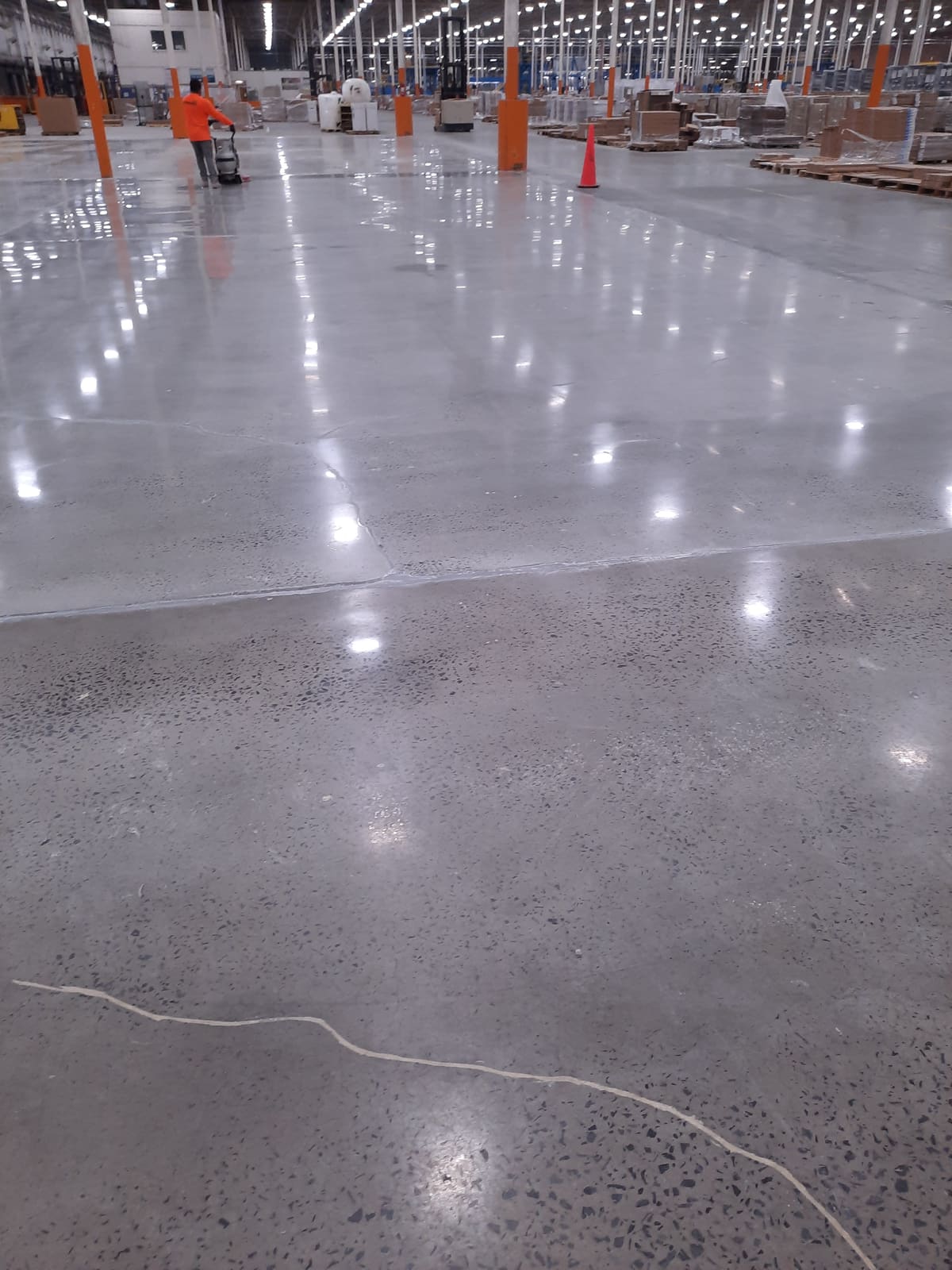
Satin (Level 2)400 grit resinSoft, matte-adjacent glow; low glare; hides fine wear bestWarehouses, back-of-house, industrial chic interiors
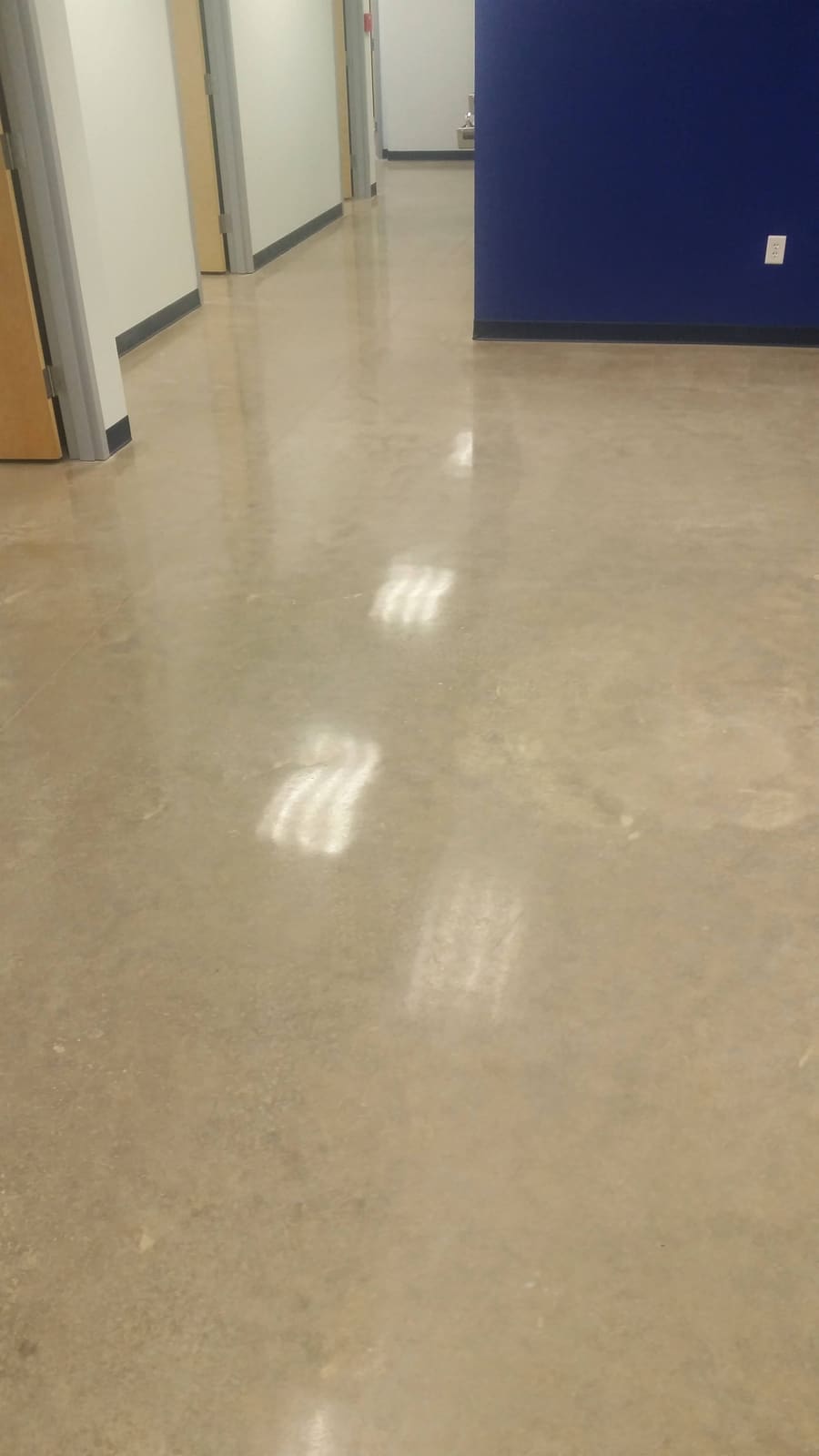
Semi-Gloss (Level 3)800 grit resinClear reflection with depth — the most popular commercial levelRetail, showrooms, schools, offices
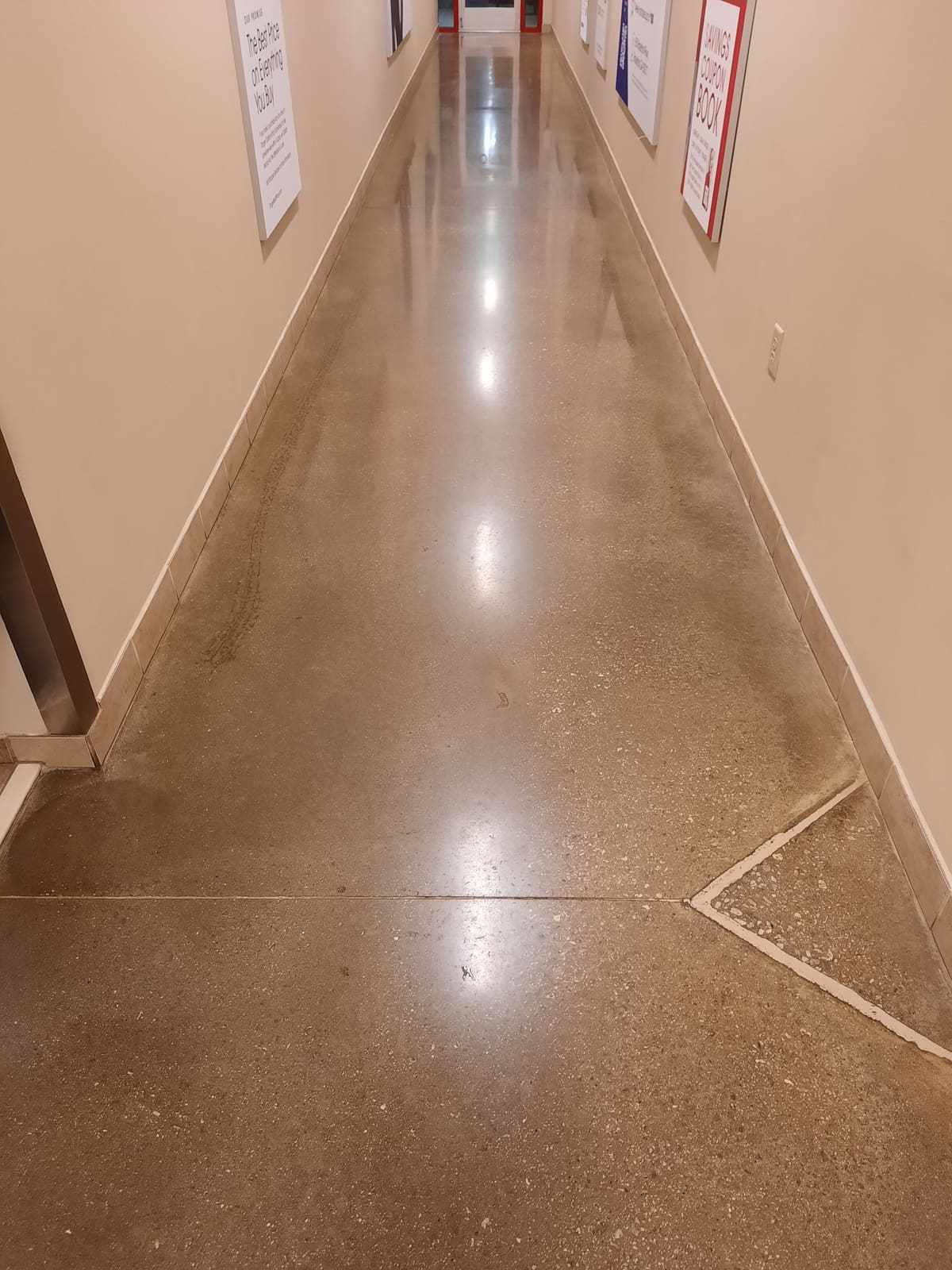
High Gloss (Level 4)1,500–3,000 grit resinMirror-like clarity; maximum light bounceShowrooms, lobbies, galleries, statement floors

Aggregate Exposure — How Much Stone Do You Want to See?

How deep we cut with the metal-bond diamonds sets the character of the floor. A cream finish barely opens the surface, keeping the smooth, uniform face of the slab. Salt-and-pepper cuts slightly deeper, revealing fine sand and small stone — the classic polished-concrete look. Full aggregate exposure grinds down to the rock, turning the slab into something closer to terrazzo. Slab condition influences the options, and we'll show you a test panel before committing the whole floor.

Optional Color: Dyes

Penetrating concrete dyes can be worked in during the honing stages — deep charcoals, warm earth tones, or bold accent colors that become part of the polished surface rather than a layer on top of it.

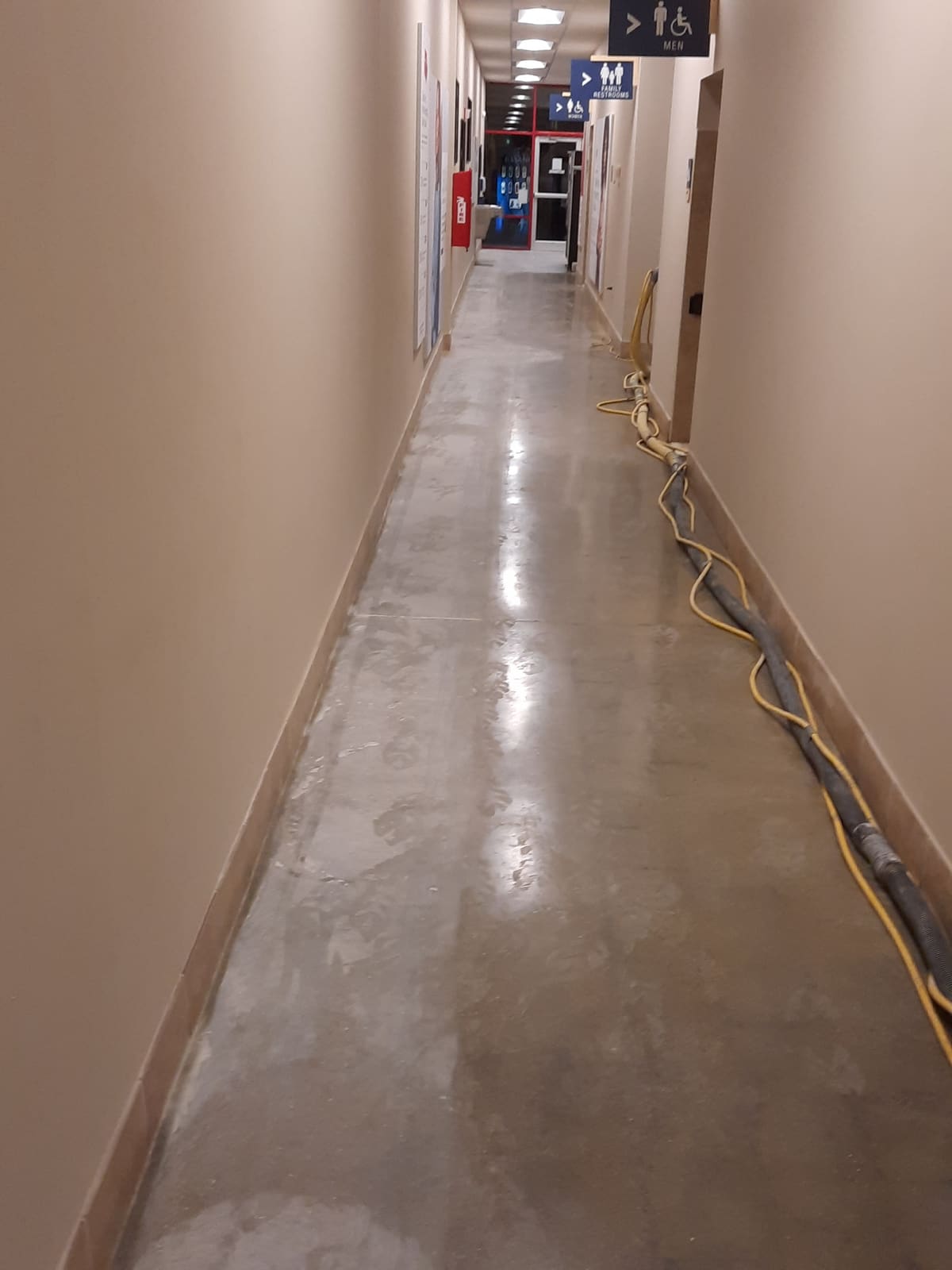
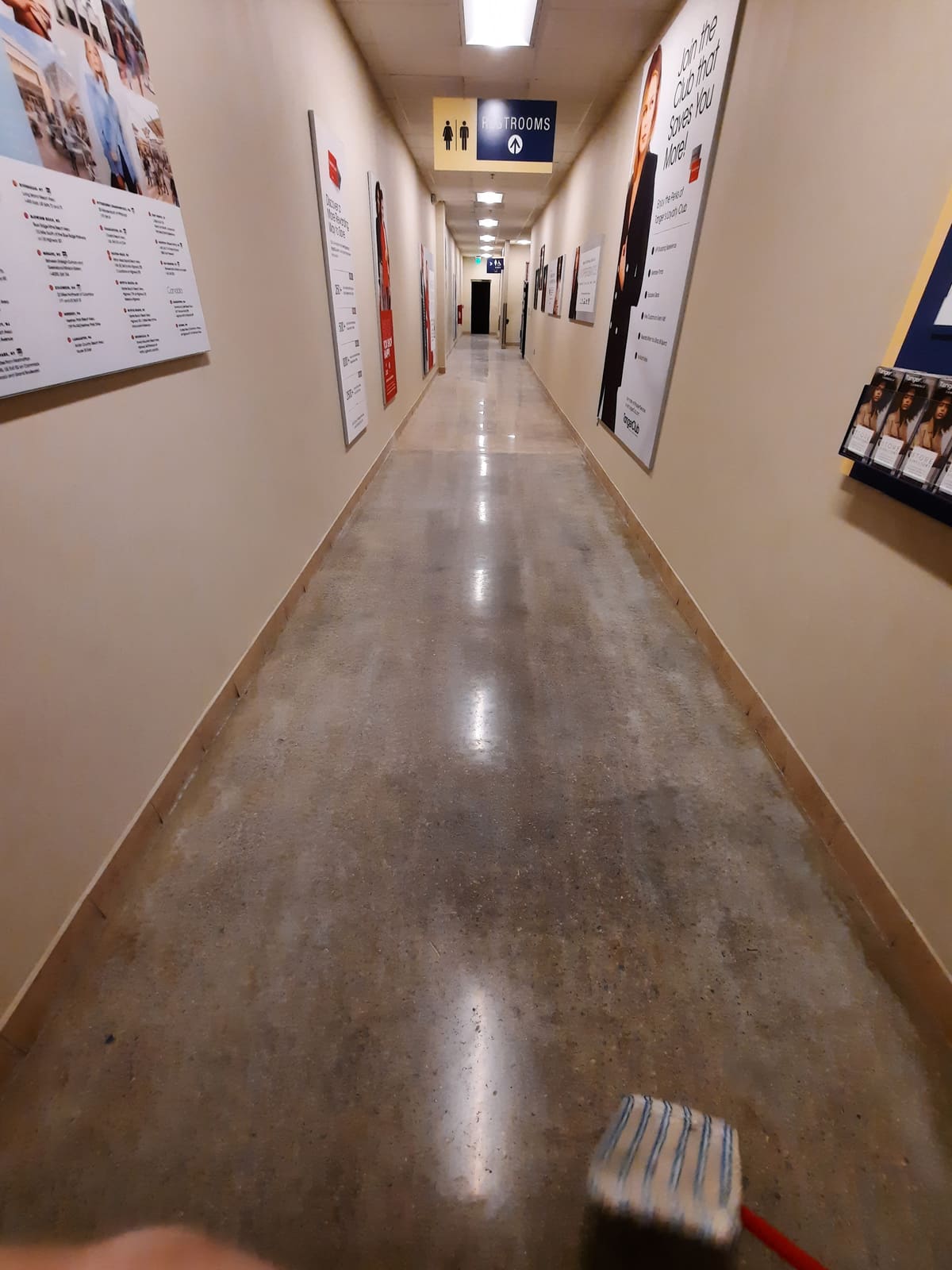
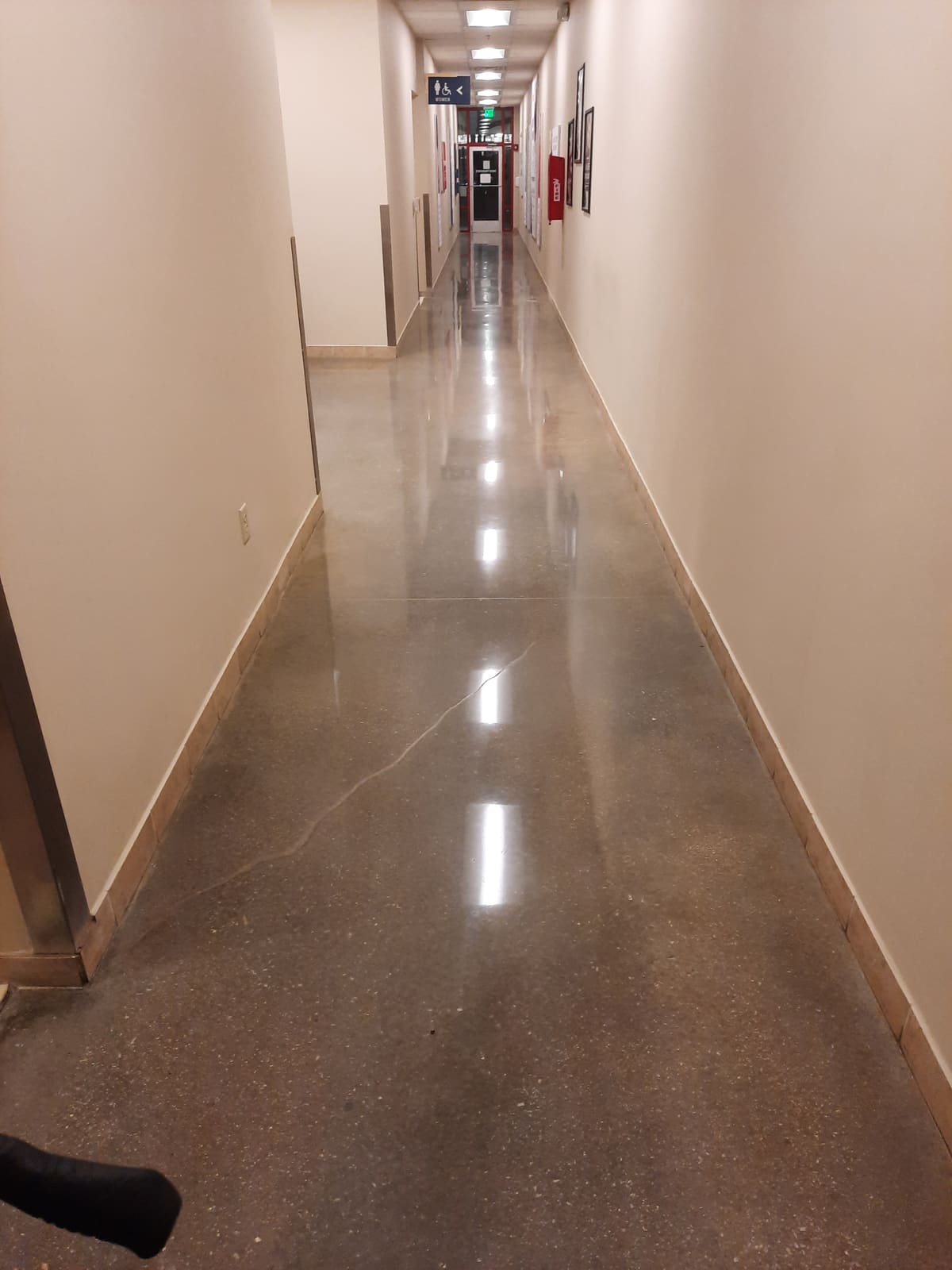
Photo: Satin finish — warehouse
Photo: Semi-gloss — retail floor
Photo: High gloss with exposed aggregate

Thinking Your Slab Might Have a Shine In It?

We'll grind and polish a test panel on your actual floor so you can see the finish before you commit to a square foot.

Book a Free Assessment Call (912) 656-2536

Why Facilities Choose Polished

The lowest lifetime-cost commercial floor there is — and it happens to be beautiful.

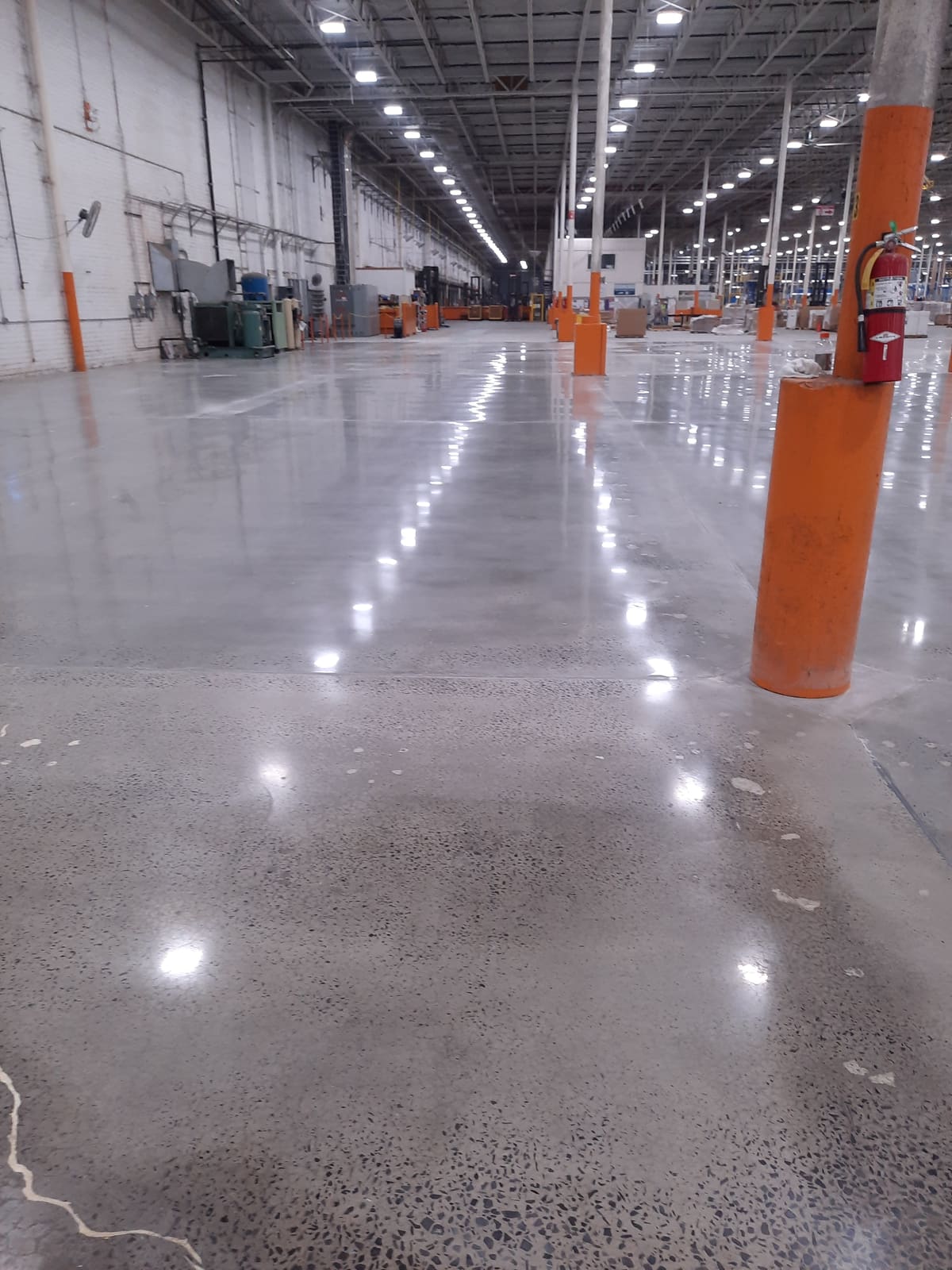
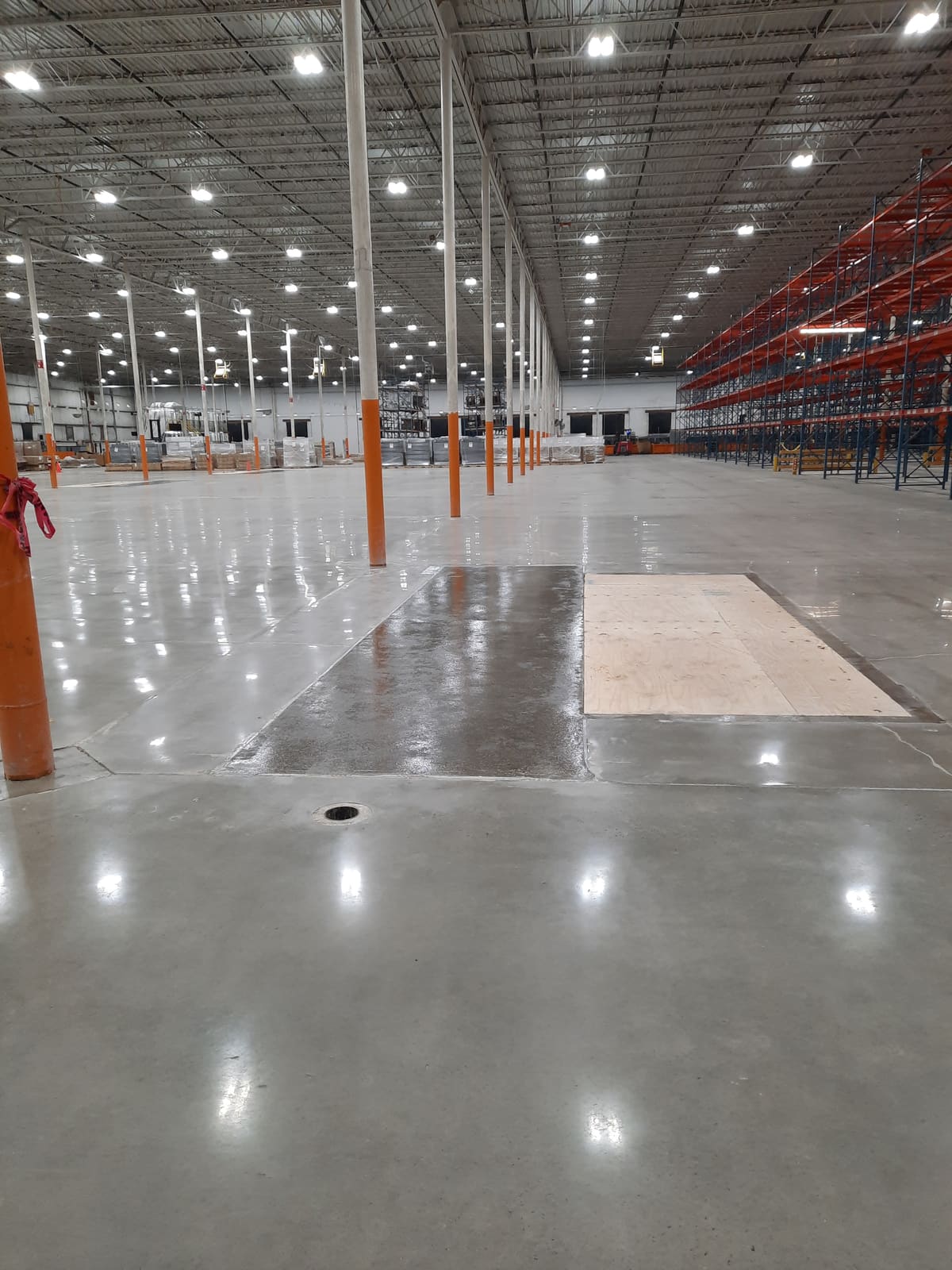
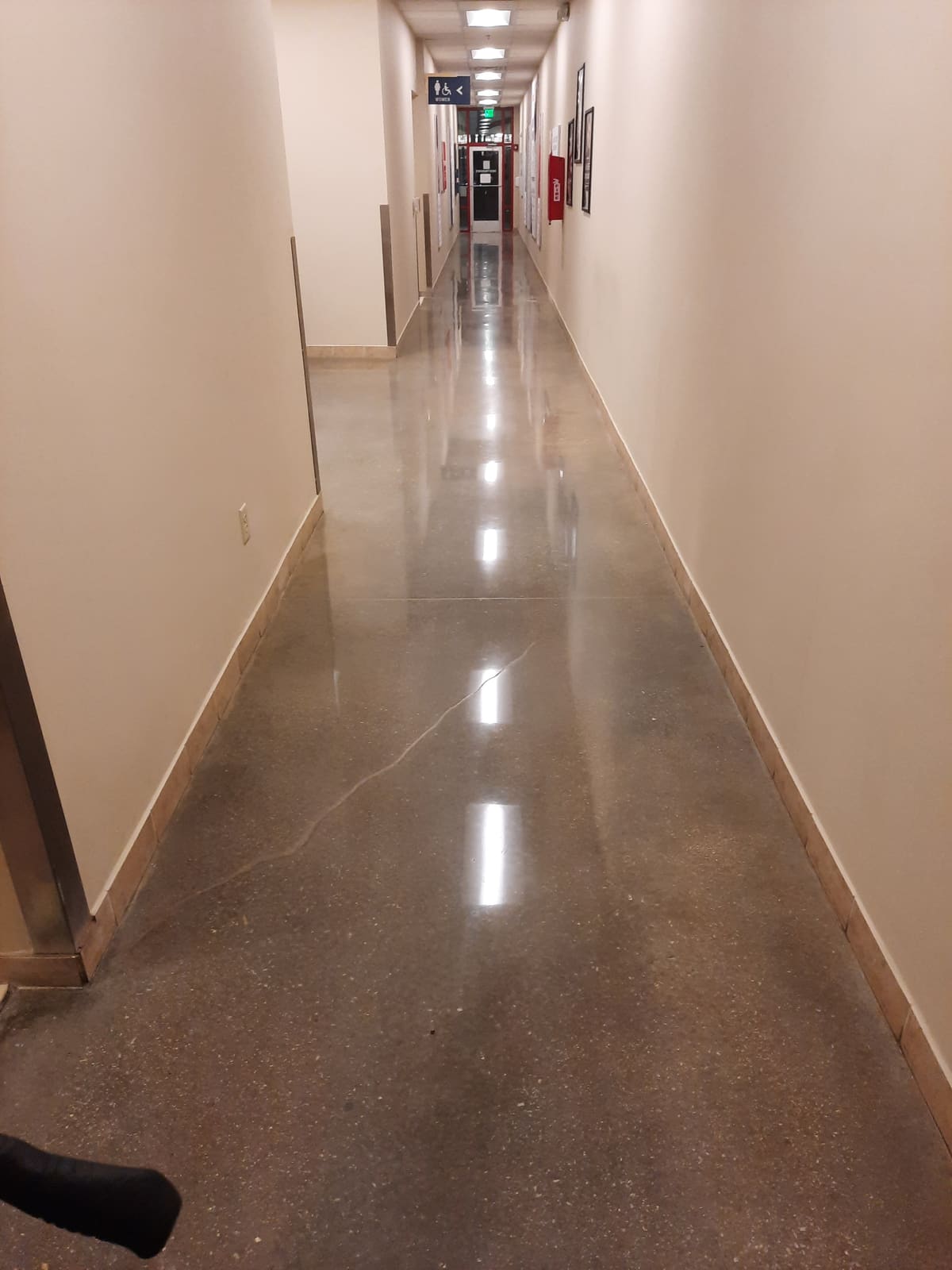
Photo: Large polished commercial floor
💎

Lasts the Life of the Building

No coating means nothing to peel or delaminate — ever. Re-burnish every few years and the shine comes right back.

💡

Up to 40% More Light Reflectivity

A polished floor bounces ambient light through the space — brighter aisles and showrooms, measurably lower lighting bills.

💰

Lowest Maintenance Cost Per Year

No waxing, no stripping, no recoating cycles. Dust mop and auto-scrub with a neutral cleaner — that's the program.

🦠

Clean & Allergen-Free

No grout lines, no fibers, no porous zones to harbor dust, mold, or bacteria — a favorite in schools and food-adjacent spaces.

👟

Meets Slip Standards

Counterintuitive but true: properly polished concrete meets wet coefficient-of-friction guidance — better traction than glazed tile.

Best Use Cases

Polished concrete shines brightest — literally — in big, trafficked, daylight-lit spaces.

Warehouses & Distribution Retail & Grocery Showrooms & Dealerships Schools & Universities Office & Co-Working Restaurants & Taprooms Churches & Event Halls Museums & Galleries Municipal Buildings Modern Homes

Prep Is Everything

Ninety percent of coating failures trace back to poor preparation. That's why we never skip it — and never rush it.

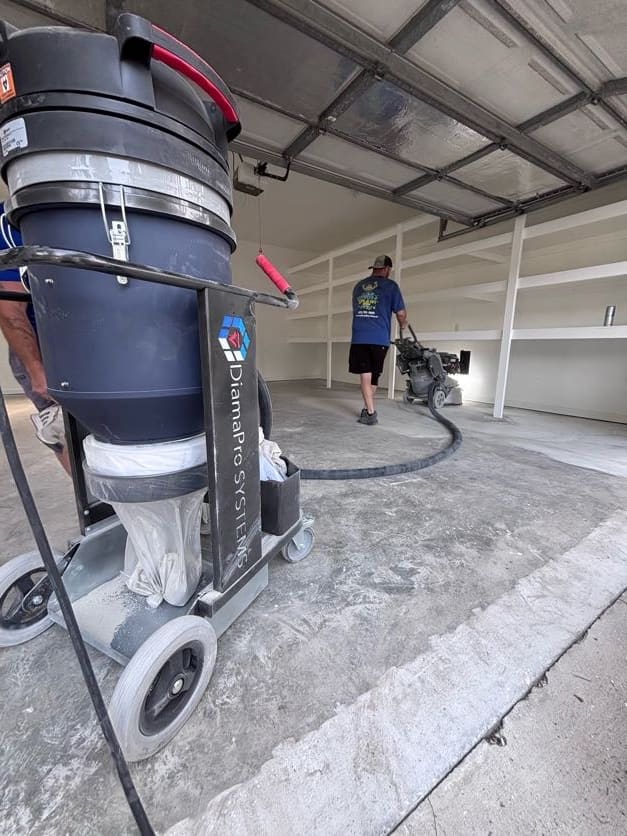
Polishing is prep, start to finish — the machines and tooling just get finer as we go. Our 20–30 inch propane planetary grinders run the full metal-bond and resin-bond sequence with SVX-series HEPA vacuums capturing dust at every pass, so even occupied stores and schools stay clean and open around the work. Cracks and joints are filled and honed flush; old coatings, mastics, and glue lines are cut away in the first passes.

Photo: Diamond grinder in action
Photo: Dust-free vacuum setup
⚙️

Propane Diamond Grinders

Our 20–30 inch propane planetary diamond grinders profile the entire slab evenly — no cords, no missed spots, no shortcuts. Every floor is mechanically ground to the correct concrete surface profile (CSP) for the system going down on top of it.

🌀

HEPA Dust Extraction

Our SVX-series industrial HEPA vacuums connect directly to the grinders, capturing dust at the source. Your home or business stays clean, and the slab is left spotless and ready to bond.

💧

Moisture Testing

Coastal Georgia slabs carry moisture. We test every floor for moisture vapor transmission before a drop of product goes down — and apply a dedicated moisture vapor barrier when the readings call for it.

🩹

Crack & Joint Repair

Cracks, spalls, and pitting get patched with fast-setting repair mortars and ground flush. Expansion joints are honored so slab movement never telegraphs through your new floor.

The Polishing Sequence

A disciplined grit progression — skip a step and the floor tells on you forever. We don't skip steps.

1

Coarse Metal Grind

30–70 grit metal-bond diamonds flatten the slab and expose your chosen aggregate level.

2

Fine Metal Grind

120 grit metals refine the cut; cracks and joints are filled and dressed.

3

Densify

Lithium silicate densifier saturates the slab and hardens the surface from within.

4

Resin Honing

100 → 400 → 800 grit resin-bond passes refine the surface toward your sheen.

5

Polish & Guard

1,500–3,000 grit final polish, then stain guard burnished in at high speed.

Polished Concrete FAQ

What's the difference between polished concrete and a glossy coating?+
A coating is a film on top of the slab; polished concrete is the slab, mechanically refined until it shines. Coatings can chip, peel, or wear through — a polished surface can't delaminate because there's nothing to delaminate. When traffic eventually dulls it, a re-burnish or a quick re-polish of the final passes brings it back.
What does the densifier actually do?+
Lithium silicate reacts with free lime in the concrete to grow additional hard mineral inside the surface — the same calcium silicate hydrate that gives concrete its strength. The result is a measurably harder, denser, dust-proofed slab that takes a higher polish and holds it far longer under traffic.
What kinds of diamonds do you use, and why does grit matter?+
Coarse metal-bond diamonds (30–120 grit) do the cutting and flattening; resin-bond diamonds (100 up to 3,000 grit) do the honing and polishing. Each grit erases the scratch pattern of the previous one at a finer level — stop at 400 and you have satin, 800 is semi-gloss, 1,500–3,000 is high gloss. The sequence is the craft.
Can every slab be polished?+
Most sound slabs, yes — including older ones, which often polish with beautiful character. Heavily patched, badly cracked, or very soft slabs may not support a full polish; in those cases a grind & seal or an overlay-then-polish approach gets you the look with a build that suits the slab. We test-grind before quoting so you get a straight answer.
Is polished concrete slippery?+
Less than it looks. Properly polished and guarded concrete meets wet coefficient-of-friction guidance and outperforms glazed tile for traction. For wet-prone zones we can specify a finish level and guard product that prioritizes grip.
How do we maintain it?+
Dust mop daily, auto-scrub or damp mop with a neutral-pH cleaner, and keep grit off the floor with entrance mats. Periodic high-speed burnishing restores the gloss. What you never do: wax, strip, or recoat.
Can you polish while our business stays open?+
Usually yes. The process is dust-controlled, low-odor, and naturally phases into sections — we routinely polish retail and institutional floors in zones, overnight, or over consecutive weekends so operations continue.

What Our Customers Say

"Frog Splash coated our entire auto shop — over 3,200 sq ft. They worked over a weekend so we lost zero business days. The floor has held up perfectly under daily vehicle and forklift traffic for over a year."

JT
James T.
Pooler, GA — Auto Shop, 3,200 sq ft

"We needed a USDA-compliant floor for our commercial kitchen. Frog Splash handled the spec, the coved base, and the whole installation without disrupting our lunch service. Health inspector approved on the first visit."

RL
Rachel L.
Savannah, GA — Restaurant Kitchen

"Our warehouse had over 8,000 sq ft of damaged concrete. Frog Splash phased the work over two weekends — we never shut down. The floor is now completely transformed and we haven't had a maintenance issue since."

DK
David K.
Savannah, GA — Distribution Warehouse

Serving Savannah & The Coastal Empire

Frog Splash Coatings delivers commercial concrete polishing across the Coastal Empire — Savannah, Pooler, Richmond Hill, Statesboro, Hinesville, and Brunswick, Georgia, along with Bluffton and Hilton Head, South Carolina.

Get Your No-Hassle Estimate Today

Book Free Estimate Call Now
Free Estimate